

 Available in GB
How UK Gambling Regulation Shapes Online Casino Software
Online casino software used in Great Britain operates within a regulatory structure established by the Gambling Act 2005. The legislation is the primary framework governing gambling in Great Britain, while the UK Gambling Commission (UKGC) regulates both land-based and online casinos. Its role extends beyond the businesses that display a casino brand. It also shapes the conditions under which remote gambling services, technical systems and provider relationships can operate.
The central regulatory distinction is between the operator and the software used to deliver gambling services. An online casino may present games supplied by another business, but the operator serving consumers in Great Britain remains responsible for holding the appropriate authorisation. A provider’s involvement does not remove the operator’s licensing obligations.
The UKGC and remote gambling
The UK Gambling Commission was established under the Gambling Act 2005 and assumed full powers in 2007. It issues operating, personal and premises licences to gambling operators. For an online casino, the relevant category is a remote operating licence, because the gambling activity is provided remotely rather than from a physical casino premises.
Use this list to quickly review key facts about licensed UK operators, including their stated bonuses, payout times, and minimum deposits. It provides a concise starting point for choosing which options to explore further.
License: UKGC Operator Licence · Bonus: £100 bonus · Payout speed: Within 24 hours · Min. deposit: £10 ProgressPlay Limited holds a UKGC Operator Licence and lists a £100 bonus. Its stated payout speed is within 24 hours, with a £10 minimum deposit.
License: UKGC Operator Licence · Bonus: £200 welcome bonus · Payout speed: Within 48 hours · Min. deposit: £10 32Red holds a UKGC Operator Licence and offers a £200 welcome bonus. Payouts are stated as being within 48 hours, and the minimum deposit is £10.
License: UKGC Operator Licence · Bonus: £50 bonus · Payout speed: Within 48 hours · Min. deposit: £10 Platinum Gaming Limited is licensed by the UKGC and lists a £50 bonus. Its stated payout speed is within 48 hours, with a £10 minimum deposit.
License: UKGC Operator Licence · Bonus: £20 bonus · Payout speed: Within 48 hours · Min. deposit: £10 Silverbond Enterprises holds a UKGC Operator Licence and lists a £20 bonus. Payouts are stated as being within 48 hours, and the minimum deposit is £10.
License: UKGC Operator Licence · Bonus: £100 bonus · Payout speed: Within 24 hours · Min. deposit: £10 Genesis Global Limited holds a UKGC Operator Licence and offers a £100 bonus. Its stated payout speed is within 24 hours, with a £10 minimum deposit.
License: UKGC Operator Licence · Bonus: £100 bonus · Payout speed: Within 24 hours · Min. deposit: £10 LeoVegas holds a UKGC Operator Licence and lists a £100 bonus. Payouts are stated as being within 24 hours, and the minimum deposit is £10.
Operators providing online gambling services to consumers in Great Britain must hold a UKGC licence regardless of where they are based. The location of a software company, platform supplier or corporate group therefore does not determine whether the operator needs British authorisation. The relevant issue is the provision of gambling services to consumers in Great Britain.
This framework affects the complete software environment behind an online casino. It may include the platform through which accounts are managed, the systems that record gambling activity, the interface through which games are accessed and the technical arrangements connecting the operator with external game providers. The regulatory obligation remains attached to the licensed gambling service, even when elements of that service are supplied by separate companies.
What provider compliance means
“Game providers and software” describes a commercial and technical relationship rather than a separate alternative to licensing. A provider can create or supply casino content, but the operator must still ensure that the service is offered in accordance with its UKGC obligations. The existence of a recognised supplier does not, by itself, establish that every casino using its software is authorised in Great Britain.
Provider compliance is therefore best understood through the operator’s regulatory position. The operator must hold the relevant remote operating licence and maintain systems capable of supporting its obligations under the regulatory framework. Where software is supplied externally, the operator’s arrangements with that supplier form part of the wider control environment surrounding the licensed service.
This approach prevents software branding from becoming a substitute for regulatory verification. A familiar platform name or a large catalogue of games does not demonstrate that a particular casino may lawfully serve consumers in Great Britain. The legal status belongs to the operator providing the remote gambling service.
Primary Regulator UK Gambling Commission (UKGC)
Key Legislation Gambling Act 2005
Legal Gambling Age 18
Tax on Winnings 0% (Tax-free)
Licences and responsibilities
The UKGC issues several forms of licence, each serving a different regulatory purpose. Operating licences authorise gambling businesses to provide specified services. Personal licences apply to relevant individuals, while premises licences relate to gambling premises. For online casino provision, the remote operating licence is the key authorisation because the service is delivered through remote means.
The licence structure also explains why software should not be assessed in isolation. A technical supplier may have an important role in the operation of a casino, but it is not necessarily the entity named on the customer-facing operating licence. The operator remains the party whose authorisation permits the remote service to be provided to consumers in Great Britain.
The Gambling Act 2005 gives the UKGC powers to supervise licensed gambling businesses. Those powers include regulatory action where licence obligations are not met. As a result, compliance is not a one-time label attached to a software platform. It is an ongoing condition of operating the service.
Public verification of a casino service
The UKGC maintains a public register of current operating and personal licences. This register provides a more reliable basis for checking a casino than software claims, branding or statements about the origin of its games.
A licence check involves matching the operator’s name or licence number against the UKGC public register and confirming that the domain used by the casino is the domain listed there. The domain check matters because a licence entry must correspond to the service being examined. A corporate name that appears in the register does not automatically establish that every website associated with that name is covered.
This distinction is particularly relevant where several brands, domains or software systems are connected to one corporate group. The public register can identify the licensed operator, but the listed domain must also correspond with the website providing the remote gambling service. Software supplied by a third party does not replace this verification step.

Regulatory oversight of technical arrangements
The regulatory framework treats online casino software as part of a controlled gambling service rather than as an independent guarantee of legality. Platform functions, account records and game integrations must operate within the operator’s licensed environment. The UKGC’s oversight consequently reaches the way in which the operator organises and controls its service, including relationships with external suppliers.
This does not mean that every software provider is the customer-facing licence holder. It means that the operator cannot avoid responsibility by attributing a technical feature to a contractor. Commercial outsourcing may divide the work, but it does not divide the operator’s duty to provide remote gambling lawfully in Great Britain.
The same principle applies when software is used across different jurisdictions. A platform may serve operators in several markets, yet a licence held elsewhere does not authorise remote gambling for consumers in Great Britain. British-facing provision requires the relevant UKGC authorisation.
Why the distinction matters
Separating software supply from operator licensing clarifies several common points of confusion. First, the quality or familiarity of a game platform does not prove that the casino using it is authorised. Secondly, an overseas provider does not remove the requirement for a UKGC licence when the service is offered to consumers in Great Britain. Thirdly, a corporate relationship between a casino and a supplier does not make the supplier’s status a substitute for checking the casino’s own licence.
The practical regulatory chain is therefore straightforward: the Gambling Act 2005 provides the legislative basis; the UKGC supervises the market; the operator obtains a remote operating licence; and the software environment must function within that licensed service. The public register then allows the operator and listed domain to be checked against the regulator’s records.
For online casino software in Great Britain, legality is consequently determined by the regulated service and its operator, not by the software label alone.
Essential Summary
- Legality is determined by the operator’s UKGC licence, not just the software used.
- Credit card deposits are strictly prohibited for gambling in Great Britain.
- Promotional offers must comply with age verification and responsible gambling rules.
- Players have the right to stop playing and retain their remaining deposits and winnings.
Deposits, Withdrawals and Payment Controls in Great Britain
Payment arrangements at online casinos serving Great Britain are shaped by restrictions on credit, requirements for customer verification and rules intended to preserve access to deposited funds and winnings. The relevant framework applies to remote gambling operators accepting customers in England, Wales and Scotland. It concerns how money enters an account, how it is held, and how it can be returned to the player.
Deposits and permitted funding methods
A central restriction is the prohibition on credit-funded gambling. Operators must not accept payment for gambling by credit card, including payments made through a money service business. The rule also covers credit card deposits made through an electronic wallet. An e-wallet cannot be used for gambling if it is funded by credit unless the wallet provider can demonstrably prevent credit cards from being used for online gambling through that service.
This distinction matters because the payment instrument shown at the casino may not reveal the original source of the funds. A wallet balance, for example, is not automatically acceptable merely because the casino receives a wallet payment rather than card details. The relevant control concerns whether credit has been used to fund the gambling transaction.
Payment services listed for the market include Faster Payments, Open Banking, PayPal, Neteller, Skrill, Paysafecard, Boku and Mastercard. Their availability is not a universal entitlement: an operator’s payment page determines which services are enabled for a particular account. The existence of a payment brand in the wider market does not establish that every casino accepts it, nor does it establish identical processing conditions.
Operators must also maintain policies covering anti-money laundering and counter-terrorist financing, customer identification, data protection and complaints. These controls can affect a payment even where the method itself is permitted. A deposit or withdrawal may therefore be considered alongside information about the customer, the account and the source of funds.
Verification before funds are released
Payment controls are connected to Know Your Customer procedures. Operators must implement KYC policies, and the UKGC assesses identity and ownership, finances, integrity, competence and criminality when considering licence applications. For customers, this means that an account may require identity or financial information before a withdrawal is completed.

The purpose of such checks is not limited to preventing unauthorised access. They also support anti-money-laundering obligations and help an operator establish that the person using the account is the account holder. A casino may therefore request documents or other evidence relevant to identity, payment ownership or the source of funds. The supplied facts do not establish a universal document list or a fixed processing period, so no single set of requirements can be presented as applying to every operator.
A payment method can also impose its own conditions. An e-wallet or bank service may require separate verification under its own rules, while the casino remains responsible for complying with the obligations attached to its remote gambling operation. These are related but distinct controls: approval by a payment provider does not replace the casino’s KYC duties.
Withdrawals and access to account funds
Players must be able to stop playing at any time and retain their remaining deposit and winnings earned from that deposit. This principle separates access to funds from continued gambling activity. A player is not required to keep wagering in order to preserve the balance already held in the account.
The rule does not mean that every withdrawal is immediate or that all payment methods operate identically. A withdrawal can still be subject to identity checks, anti-money-laundering controls and the technical conditions of the selected payment service. The available facts provide no general withdrawal deadline, minimum amount, fee schedule or universal list of documents. Such details must therefore be treated as operator-specific rather than as general conditions for Great Britain.
The distinction between a pending payment and a forfeited balance is also important. Compliance review may delay release while information is assessed, but the stated player-protection requirement concerns the ability to stop playing and retain remaining deposits and winnings earned from those deposits. Payment procedures should not be described as requiring further play as a condition of keeping an account balance.
- Verify the operator’s name and domain against the UKGC public register.
- Set deposit limits before making your first deposit.
- Ensure the casino is a member of the GamStop scheme if self-exclusion is required.
- Use credit cards to fund gambling transactions.
- Assume a familiar software brand implies the casino is legally authorised.
- Rely on a non-GamStop label as proof of UKGC licensing.
Deposit limits and payment-related safeguards
Operators must prompt players to set a deposit limit before the first deposit. A deposit limit is a prospective control on deposits rather than a withdrawal facility. It does not determine the tax treatment of winnings, and it does not replace identity or payment verification.
Operators must also provide loss limits, session time limits, reality checks, self-exclusion and timeouts. These safeguards sit alongside payment controls because they can restrict further gambling without removing a player’s right to retain funds already held in the account. The payment process and the responsible-gambling system therefore perform different functions: one governs the movement and verification of money, while the other governs continued access to gambling.
From 28 February 2025, remote operators must check customers with net deposits of £150 or more per month. This is a defined compliance threshold for customer checks. It should not be presented as a general deposit limit, a withdrawal cap or a fee. Its relevance is that payment activity can trigger additional scrutiny under the operator’s regulatory obligations.
Tax treatment of winnings
Customers in the UK pay no gambling tax on winnings. Gambling winnings are tax-free regardless of the amount won. This concerns the customer’s tax position and does not remove the operator’s responsibilities concerning payment controls, KYC, anti-money-laundering procedures or account security.
The absence of gambling tax on winnings also does not convert every incoming payment into a winning. Deposits, returned balances and winnings remain distinct categories within the account record, even though the customer does not pay gambling tax on the winnings. Operators must still maintain appropriate records and controls for transactions conducted through the account.

Enforcement when payment controls fail
The UKGC’s enforcement powers under the Gambling Act 2005 include warnings, licence conditions, suspensions, revocations and financial penalties. These powers allow the regulator to respond where an operator fails to meet obligations connected with customer protection, payment controls or wider compliance duties.
A regulatory response does not itself establish that every payment made by an operator was improper. It indicates that the regulator has identified failures warranting action under its statutory powers. The available facts do not provide a general enforcement outcome for each payment method or a standard penalty for a particular type of transaction.
For payment arrangements in Great Britain, the established position is therefore specific rather than promotional: credit card deposits are prohibited, credit-funded e-wallet gambling is restricted, KYC and AML controls apply, customers must be able to retain remaining deposits and eligible winnings when they stop playing, and winnings are tax-free for customers. Processing times, fees and method availability require separate confirmation from the relevant operator or payment provider.
Casino Bonuses Within UK Consumer Protection Rules
Casino bonuses and promotions in Great Britain are not separate from consumer protection duties. A promotional offer is presented by a licensed gambling operator, so its advertising, eligibility conditions and use must fit within the wider framework of age control, responsible gambling and regulatory supervision. The bonus itself may involve free spins, bonus funds or another promotional benefit, but the relevant question is how that benefit is communicated and controlled rather than how attractive it appears in isolation.
Promotions begin with lawful access
The legal gambling age in the UK is 18. That requirement applies to participation in online casino gambling and therefore also applies to promotional activity connected with it. A bonus cannot lawfully be used to bypass age controls, and promotional messaging must not treat an unverified account as eligible for gambling.
Age Verification
Age verification is a mandatory part of the promotional process, ensuring all participants meet the legal requirement of 18 years or older.
Age verification is consequently part of the promotional process, not an administrative detail that follows it. A licensed operator must establish that the customer is legally entitled to gamble before allowing access to the relevant service. The same principle applies when an offer is displayed through an account, email, website or other marketing channel: the existence of a promotion does not alter the age requirement.
Applicants for a UKGC licence must also be 18 or over. This requirement concerns licence applicants rather than customers, but it reflects the broader regulatory position that gambling activity and its commercial operation are subject to formal controls. Promotional campaigns therefore operate within a system in which both the operator and the customer must meet defined legal conditions.
Terms must explain the real conditions
A casino promotion is not adequately described by its headline alone. The meaningful terms include the eligibility rules, any restrictions on use, the point at which the offer becomes available and the circumstances in which the benefit may be withdrawn. Where a headline creates one impression but material conditions produce another, the communication may become misleading.
The UKGC fined LeoVegas £600,000 in May 2018 for misleading adverts and self-exclusion failings. That enforcement action illustrates why promotional compliance cannot be reduced to the wording of a single offer. Advertising conduct and player-protection procedures may be assessed together when the regulator examines how an operator treats customers.
A clear promotional presentation should distinguish between the advertised benefit and the conditions attached to it. It should not rely on an impression that a reward is unconditional if the customer must first satisfy requirements that materially affect access or use. The same care is relevant to terms shown in small print, account notices and campaign messages. A condition may be legally important even when it receives less visual prominence than the headline.
This does not mean that every promotion must be identical. It means that the description must correspond with the conditions that govern the offer. Where the available facts do not establish the terms of a particular promotion, no general claim about its value, duration or release conditions can be made responsibly.

Deposit limits remain relevant after acceptance
Remote operators must prompt players to set a deposit limit before their first deposit. This requirement matters to promotions because a bonus can influence decisions about whether to deposit or continue gambling. Acceptance of an offer does not remove the customer’s ability to set or maintain a deposit limit, and promotional wording should not imply that responsible-gambling controls can be ignored.
Deposit limits are only one element of the available safeguards. Operators must provide deposit limits, loss limits, session time limits, reality checks, self-exclusion and timeouts. These measures address different aspects of gambling behaviour. A deposit limit controls funds added to an account; a session time limit concerns time spent playing; a reality check interrupts activity with information about the session. A promotion does not replace any of these controls.
The distinction is important because promotional language may encourage attention to the reward rather than to the financial conditions of play. Consumer protection requires the operator’s systems to remain available even when a customer is responding to an offer. A bonus should therefore be understood as an additional commercial condition within a regulated account, not as permission to override player-protection procedures.
Players must also be able to stop playing at any time and retain their remaining deposit and winnings earned from that deposit. Promotional terms cannot be treated as a basis for denying this underlying protection. The precise treatment of a promotional balance may depend on the applicable terms, but a customer’s decision to stop playing cannot be converted into a general loss of deposited funds or winnings earned from those funds.
Self-exclusion and promotional contact
All remote operators must be members of GamStop, the national online self-exclusion scheme. They must also connect to a nationwide database of self-excluded users and enforce strict age control. These obligations directly affect the circulation of casino promotions.
GamStop and Self-Exclusion
All remote operators must be members of GamStop, the national online self-exclusion scheme, and must connect to a nationwide database of self-excluded users to enforce strict controls.
A self-excluded customer should not be treated as an ordinary marketing recipient merely because an advertising list, account record or promotional database still contains that person’s details. Promotional systems must operate consistently with self-exclusion controls. The existence of an automated campaign does not make contact appropriate where the customer has taken steps to prevent gambling access.
The LeoVegas enforcement action is relevant here because it involved both misleading adverts and self-exclusion failings. It demonstrates that promotional compliance and responsible gambling are not isolated subjects. A campaign may be problematic not only because of what it says, but also because of whom it reaches and how the operator’s controls respond to a customer’s vulnerability or self-exclusion status.
Enforcement gives the rules practical force
The UKGC’s powers under the Gambling Act 2005 include warnings, licence conditions, suspensions, revocations and financial penalties. These powers apply to licensed operators whose conduct falls short of regulatory requirements. Promotional practices can therefore create consequences beyond the withdrawal or amendment of an individual offer.
The enforcement record includes action connected with wider social-responsibility failures. Ladbrokes Coral agreed to pay £5.9 million in July 2019 for anti-money laundering and social responsibility failings. Entain paid £17 million in 2022 for social responsibility and anti-money laundering failures, according to a specialist industry overview. These cases do not establish that every promotional breach leads to a particular penalty, nor do they define the terms of individual bonuses. They do show that social responsibility is an enforceable part of operating a gambling business.
The regulatory significance of a promotion is therefore cumulative. Age verification establishes who may participate. Clear terms determine what the offer actually provides. Deposit limits and other controls restrict the risks associated with continued play. GamStop and self-exclusion procedures govern whether promotional contact should occur. Enforcement powers provide the mechanism through which failures can affect the operator’s licence.

For that reason, casino bonuses in Great Britain are best assessed as regulated communications attached to a controlled gambling service. Their commercial wording matters, but so do the systems surrounding the offer. A promotion that appears generous cannot lawfully displace the age requirement, responsible-gambling procedures or the protections attached to a customer’s account.
Games, Slots and the Standards Behind Casino Content
Casino content supplied to players in Great Britain sits within a regulated remote gambling service. The games may differ in format, rules and presentation, but their availability is not separate from the operator’s legal responsibilities. A remote operating licence is required for online gambling activities in Great Britain, and the UK Gambling Commission (UKGC) can take enforcement action when a licensed service fails to meet its obligations.
This distinction matters because game content is often discussed as though it were independent of the casino providing access to it. In practice, the operator remains the regulated entity visible to the player. The UKGC issues operating, personal and premises licences to gambling operators, while the remote operating licence is the relevant category for online casino activity. The licence framework therefore concerns the organisation offering the games, not merely the appearance of an individual slot or table interface.
What casino content includes
Online casino services may present several broad forms of content:
- slot-style games built around reels, symbols and programmed outcomes;
- table games based on formats such as roulette, blackjack or baccarat;
- live-dealer games using a streamed studio environment;
- other casino products delivered through remote gambling technology.
These categories describe the type of entertainment provided, not a ranking of quality or a guarantee of a particular result. No verified facts support naming specific games, providers, return percentages or volatility classifications here. Accordingly, claims about the “best” slots, the highest-paying games or the most popular titles would go beyond the available evidence.
The same caution applies to software branding. A familiar interface, a large catalogue or a recognisable design does not by itself establish that a particular game is approved, safer or more favourable. Those conclusions require evidence about the relevant operator, technical controls and applicable regulatory requirements.
The role of the regulated operator
The operator’s licence provides the central compliance link between a player and the casino catalogue. A game may be supplied through external technology, but the service offering it to consumers in Great Britain remains subject to the conditions attached to the operator’s remote gambling activity. This prevents game content from being treated as an unregulated layer beneath the casino’s main business.
Verifying a Casino
Find the legal name of the operator within the casino’s terms and conditions or licensing section.
Search for that specific company name on the UK Gambling Commission (UKGC) public register.
Confirm that the website domain you are currently using matches the specific domain listed in the UKGC register entry.
The UKGC’s enforcement powers under the Gambling Act 2005 include warnings, licence conditions, suspensions, revocations and financial penalties. It can also investigate illegal gambling. These powers create consequences at the operator level where a casino fails to comply with the standards applicable to its service. A catalogue of games is therefore not sufficient evidence of lawful operation; the regulatory status of the service providing access remains material.
A warning or financial penalty does not automatically establish that every game offered by an operator is defective. Conversely, the presence of familiar casino content does not demonstrate that the operator has met all of its obligations. Regulatory assessment concerns the conduct and controls of the licensed business, and conclusions should remain limited to the facts established by the relevant enforcement action.
Technical standards and player-facing safeguards
Casino content is delivered through software, but software quality has more than one dimension. Visual performance, mobile compatibility and interface design may affect how a game is used, yet they do not replace regulatory controls. The relevant question is whether the game is offered within a properly licensed remote gambling service and whether the operator remains subject to the UKGC’s enforcement framework.

Player-facing safeguards can also shape the way games are presented. A regulated online casino is not simply a library of entertainment products. Its operation is framed by requirements that allow regulatory intervention when the service does not meet applicable standards. The UKGC may impose licence conditions or take stronger action, including suspension or revocation, where failures justify it.
This framework also explains why descriptions of casino games should avoid implying certainty about outcomes. A slot’s theme, reel structure or bonus feature can describe its format, but none of those features establishes that a player will win. Without verified information about an individual title, it is not possible to state its return profile, volatility or comparative value.
Separating content from licensing claims
Game content and licensing are connected but not interchangeable.
| Question | What it concerns |
|---|---|
| What type of game is offered? | The format and presentation of the casino content |
| Who provides access to it? | The operator offering remote gambling services |
| What authorisation is relevant? | The operator’s remote operating licence |
| What can happen after a compliance failure? | UKGC warnings, licence conditions, suspension, revocation or financial penalties |
This separation is useful when assessing statements about online slots and casino games. A software label is not a substitute for checking the operator’s regulatory position. Equally, an operator’s licence does not justify unsupported claims about every title in its catalogue. The available evidence supports a conclusion about the regulatory structure, not a ranking of particular games.
The UKGC’s ability to investigate illegal gambling also means that lawful presentation cannot be inferred solely from a polished website or a broad selection of games. Regulatory status belongs to the service and its operating arrangements. Content should therefore be evaluated within that wider context, without turning the existence of a licence into an endorsement of a particular game.
Why unsupported game rankings are misleading
Terms such as “top slot”, “best casino game” or “highest RTP” require defined criteria and reliable evidence. No such verified game-level data is available for this section. Publishing a numbered list would therefore create an appearance of precision without an evidential basis.
Misleading Claims
Attention Do not rely on terms like “top slot” or “highest RTP” as they lack verified, game-level data and can be misleading.
A more accurate description is narrower: regulated online casino services can provide different forms of remote casino content, including slots and table games, under an operator framework overseen by the UKGC. The framework gives the regulator powers to impose warnings, conditions, suspensions, revocations and financial penalties. It does not establish that one game is superior to another, nor does it remove the uncertainty inherent in gambling outcomes.
Casino games should consequently be treated as content made available through a regulated service, rather than as independently certified products whose popularity or design proves their reliability. The operator’s authorisation and continuing compliance remain the relevant safeguards behind the catalogue.
Licensing, GAMSTOP and the Meaning of Non-GamStop Casinos
In Great Britain, licensing is the starting point for assessing an online casino’s legal position. The UK Gambling Commission (UKGC) regulates online and land-based casinos within its jurisdiction. An operator that provides remote gambling services to consumers in Great Britain must hold a UKGC licence, regardless of where the company is based. Consequently, a casino’s overseas incorporation does not replace the requirement for British licensing when its services are offered to this market.
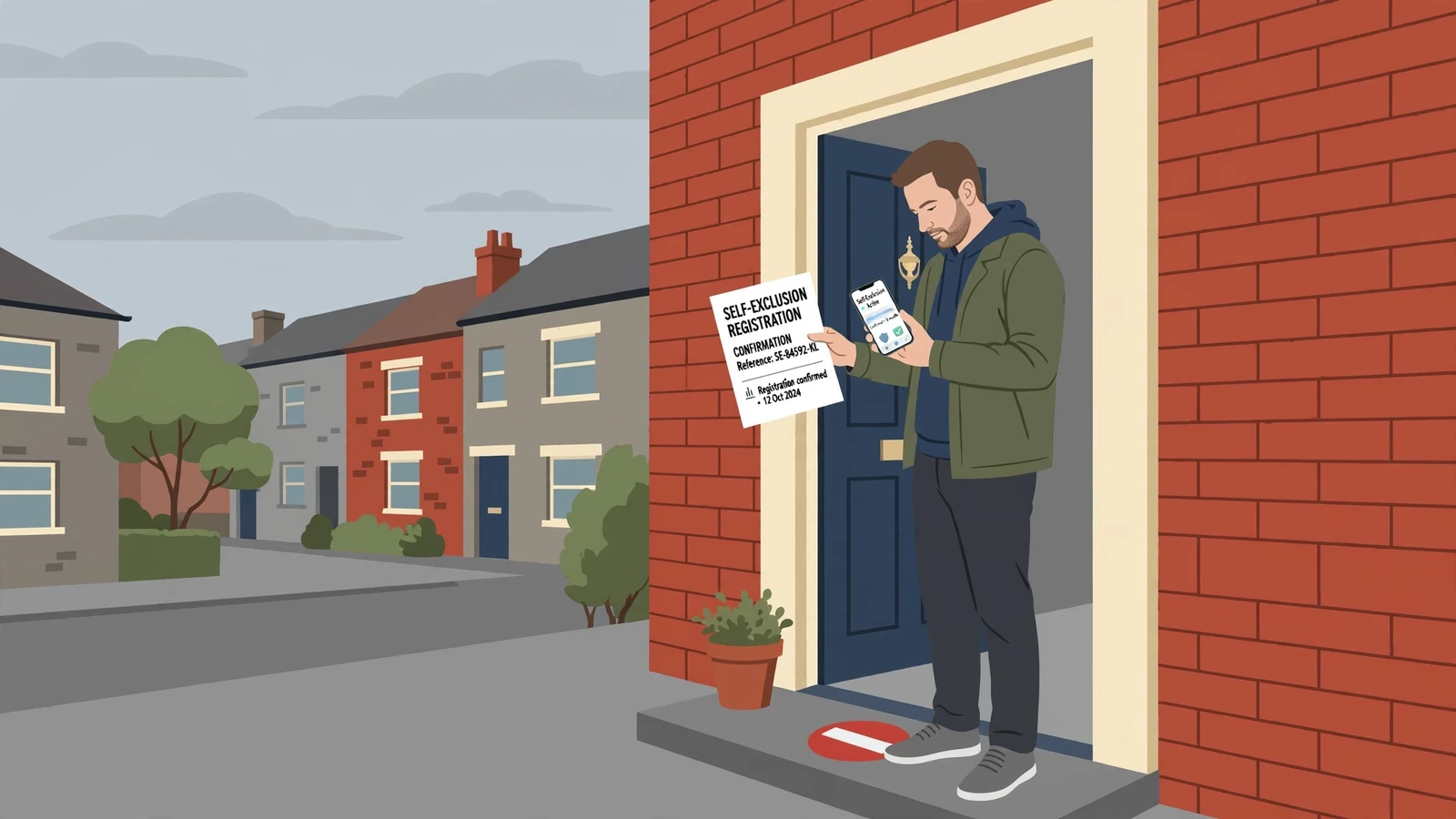
The expression “non-GamStop casino” describes a platform that is not connected to GamStop, the national online self-exclusion scheme. That description does not establish whether the operator is licensed, lawful or suitable for consumers in Great Britain. GamStop status and UKGC licensing are separate regulatory questions. A site may describe itself as non-GamStop, but the relevant legal test remains whether it is authorised to provide remote gambling to customers in Great Britain.
What a UKGC licence establishes
A UKGC licence indicates that the operator has been authorised within the British regulatory framework. It does not mean that every customer outcome is guaranteed, nor does it remove the need to examine the operator’s identity and domain. Licensing is also not permanent evidence of compliance: the Commission can impose conditions, issue warnings, suspend or revoke licences, and apply financial penalties.
The UKGC’s public register is the principal verification point. It contains current operating and personal licences. A meaningful check should connect three details:
- the legal name shown by the casino;
- the licence number, where one is provided;
- the domain listed in the UKGC register.
A matching company name alone is insufficient if the domain does not correspond to the registered website. Conversely, a logo or reference to the UKGC on a casino’s own pages is not independent confirmation. The decisive comparison is between the operator’s published details and the Commission’s register.
The register also records recent regulatory actions, including licence conditions, fines, warnings and revocations. This makes it relevant not only to the existence of a licence but also to the operator’s regulatory history. A current licence therefore should not be treated as proof that no earlier compliance concerns existed.
How non-GamStop status should be interpreted
GamStop is designed to support online self-exclusion. A casino marketed as non-GamStop is presented as outside that network, so a person enrolled in GamStop may not receive the same exclusion protection there. The label says something about access to the self-exclusion scheme; it does not itself identify the operator’s licensing authority or confirm that the casino can legally accept customers in Great Britain.
This distinction matters because “non-GamStop” is sometimes used as if it were a licensing category. It is not a UKGC licence type. Nor does the label demonstrate that a platform is an authorised alternative for British customers. The operator’s legal status must be established separately through the relevant regulatory register.
The same reasoning applies when a site uses terms such as offshore or international casino. Geographic wording does not answer whether the operator holds the licence required for remote gambling services supplied to Great Britain. The location of a company, payment processor or server cannot substitute for the licensing check.
Is a non-GamStop casino legal?
Being “non-GamStop” only describes a connection to the self-exclusion scheme; it does not confirm if the operator holds a valid UKGC licence.
Are gambling winnings taxed in the UK?
No, customers in the UK pay no gambling tax on their winnings, regardless of the amount.
Can I use a credit card for deposits?
No, the use of credit for gambling is prohibited, including credit card deposits via electronic wallets.
Age and eligibility controls
The general legal gambling age in the UK is 18. Applicants for a UKGC licence must also be at least 18. These requirements form part of the wider distinction between a regulated operator and a site that merely advertises access to British players.
A casino’s presentation of an age statement is not, by itself, evidence that the relevant controls are being applied. The stronger indicator is whether the operator can be identified in the UKGC register and whether the registered domain corresponds with the domain being used. Where those details cannot be reconciled, claims about British compliance remain unverified.
Enforcement shows why verification matters
The UKGC’s enforcement record demonstrates that a licence is subject to continuing oversight. The Commission suspended Genesis Global Limited’s licence and fined the company £3.8 million for social responsibility and anti-money-laundering failings. The case illustrates two points relevant to non-GamStop comparisons.
First, authorisation does not place an operator beyond regulatory scrutiny. A licensed business can face formal action when the Commission identifies failures. Secondly, enforcement history is different from licence status. A casino may appear in the current register while also having a recorded regulatory action, so both parts of the register are relevant.
The Commission’s powers include licence conditions, warnings, suspension and revocation, as well as financial penalties. These measures can affect whether an operator may continue providing services and under what conditions. A platform that cannot be matched to the public register lacks the same independently verifiable UKGC status, regardless of how prominently it displays regulatory language.
A practical verification sequence
A structured check avoids relying on promotional claims:
- Identify the legal operator named in the casino’s terms or licensing information.
- Search that operator name in the UKGC public register.
- Compare any published licence number with the register entry.
- Confirm that the casino’s domain is the domain recorded by the UKGC.
- Review the register for licence conditions, warnings, fines, suspensions or revocations.
- Treat “non-GamStop” as a statement about self-exclusion connectivity, not as evidence of UKGC authorisation.
If the operator name is missing, the licence number cannot be matched, or the domain differs from the registered domain, the claimed British licence has not been verified. A non-GamStop label does not resolve that uncertainty.
The central distinction is therefore between licensing and self-exclusion. UKGC licensing concerns the legal authorisation of remote gambling services in Great Britain. GamStop concerns participation in the national online self-exclusion scheme. They overlap in responsible-gambling discussions but answer different questions. A careful assessment keeps those questions separate and relies on the UKGC register rather than on the casino’s marketing description.
Prepared by the Casinouk Games Hub editorial staff.